English
Open-Weight Coding Models in 2026: A Practical Selection Guide
How to evaluate open-weight coding models by task quality, hardware, context, tool use, license, privacy, and operating cost—not benchmark headlines alone.

Tran Kim Dat
Full-stack Engineer

“What is the best open coding model?” is usually the wrong question. The useful question is: which model delivers acceptable results for this task, on this hardware, under this license, with an operational burden the team can sustain?
In 2026, open-weight options are credible enough for coding assistants, repository analysis, tool-using agents, and private deployments. They are not interchangeable. This guide compares three representative families—OpenAI gpt-oss, Mistral Devstral, and Qwen3-Coder—without pretending a single benchmark can choose for you.
Open-weight is not the same as fully open source
“Open-weight” means model weights are available for download and self-managed inference. The training data, complete training code, and full development process may not be open. Licenses also differ by model and release, so evaluate the exact artifact you plan to deploy rather than relying on a family name.
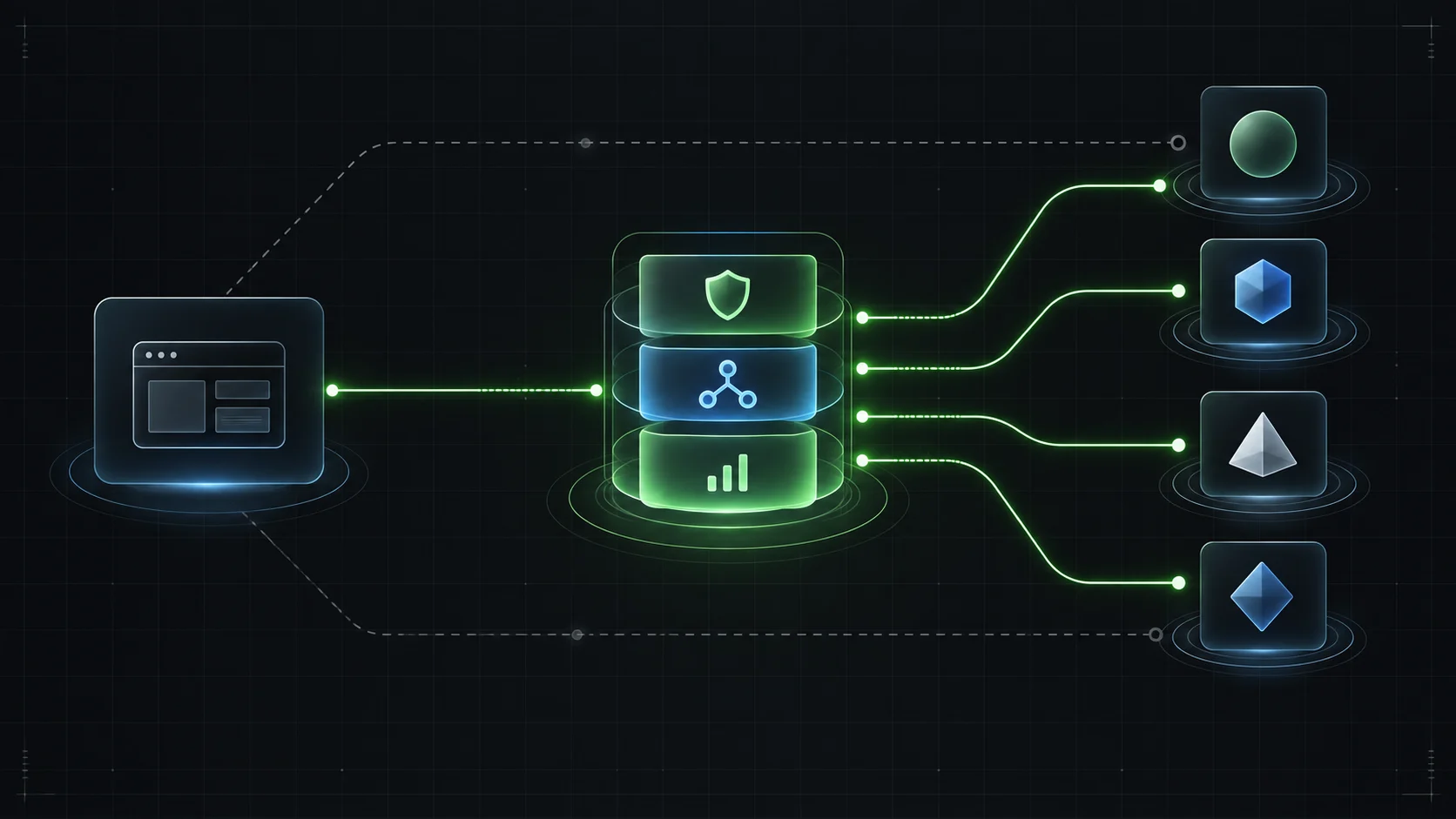
The value proposition is control: data locality, custom serving, fine-tuning or adapters, predictable availability, and the ability to inspect the deployment stack. The tradeoff is ownership of inference capacity, upgrades, security, monitoring, and incident response.
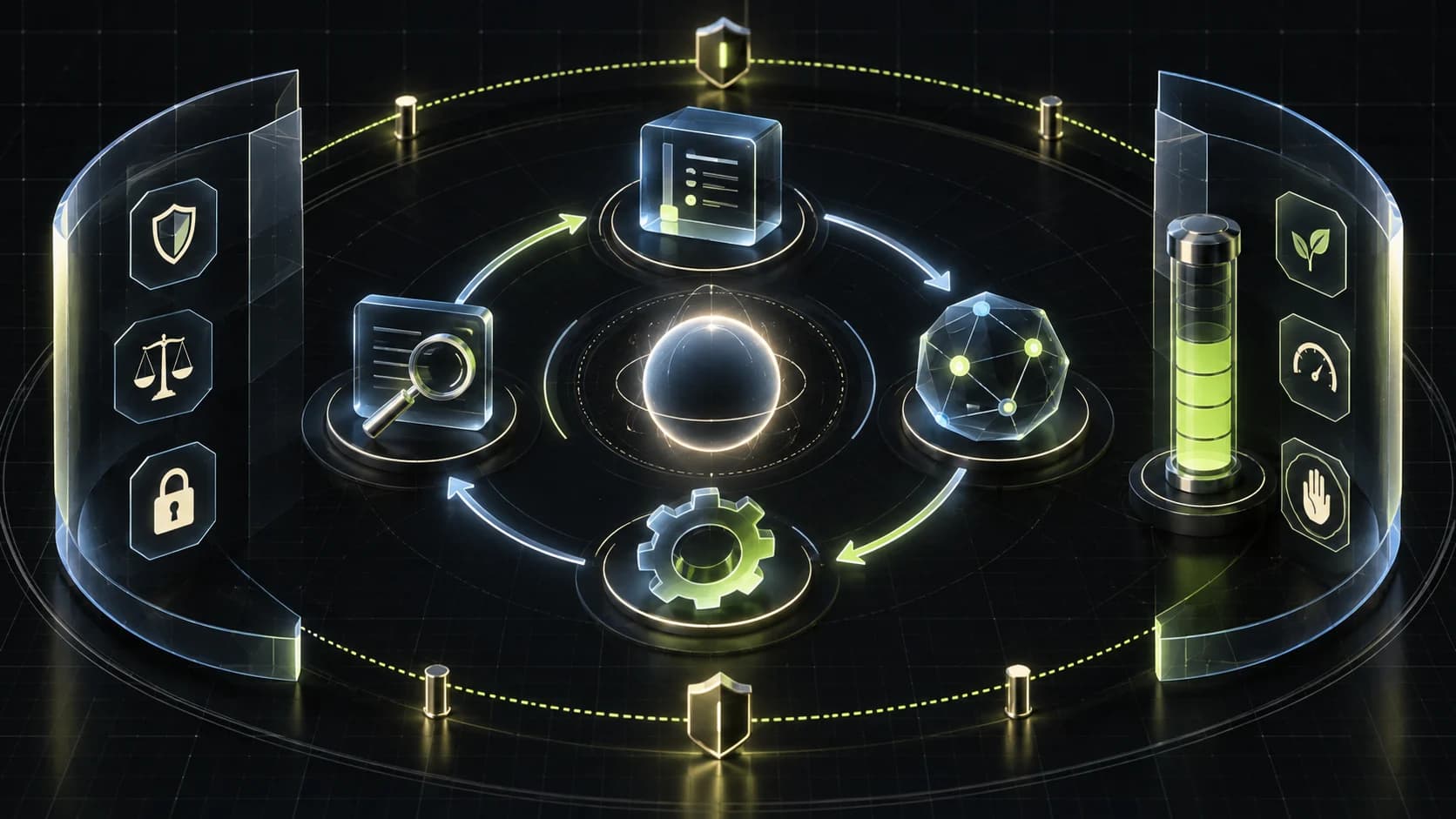
The three model families
OpenAI gpt-oss
OpenAI released gpt-oss-120b and gpt-oss-20b under Apache 2.0. The company describes them as text-only reasoning models with tool use and a 128K context window. The 120b model has 117 billion total parameters with 5.1 billion active per token; the 20b model has 21 billion total and 3.6 billion active.
The smaller model makes experimentation and private deployment more approachable, while the larger model targets higher-capacity environments. OpenAI explicitly positions gpt-oss as self-managed rather than an OpenAI API or ChatGPT product, so infrastructure cost and operational skill belong in the comparison.
Mistral Devstral
Mistral designed Devstral for software-engineering agents rather than code completion alone. Devstral 2 is a 123B model with a 256K context window, while Devstral Small 2 is a 24B alternative intended for lighter deployments. Mistral publishes Devstral Small 2 under Apache 2.0; Devstral 2 uses a modified MIT license, so teams should read the current terms for their use case.
Mistral’s own benchmark results are encouraging, but they remain vendor-reported. Treat them as a reason to test, not a substitute for testing your repositories, languages, and tools.
Qwen3-Coder
Qwen3-Coder emphasizes agentic coding, tool use, browser interaction, and long context. The original flagship announcement described a 480B mixture-of-experts model with 35B active parameters, a native 256K context window, and extrapolation to 1M tokens. The project continues to evolve, so pin the exact checkpoint and serving stack in every evaluation report.
Qwen also provides Qwen Code, a terminal-oriented agent. That pairing can reduce integration work, but it should not hide the quality of the model itself or the security boundaries required for local tools.
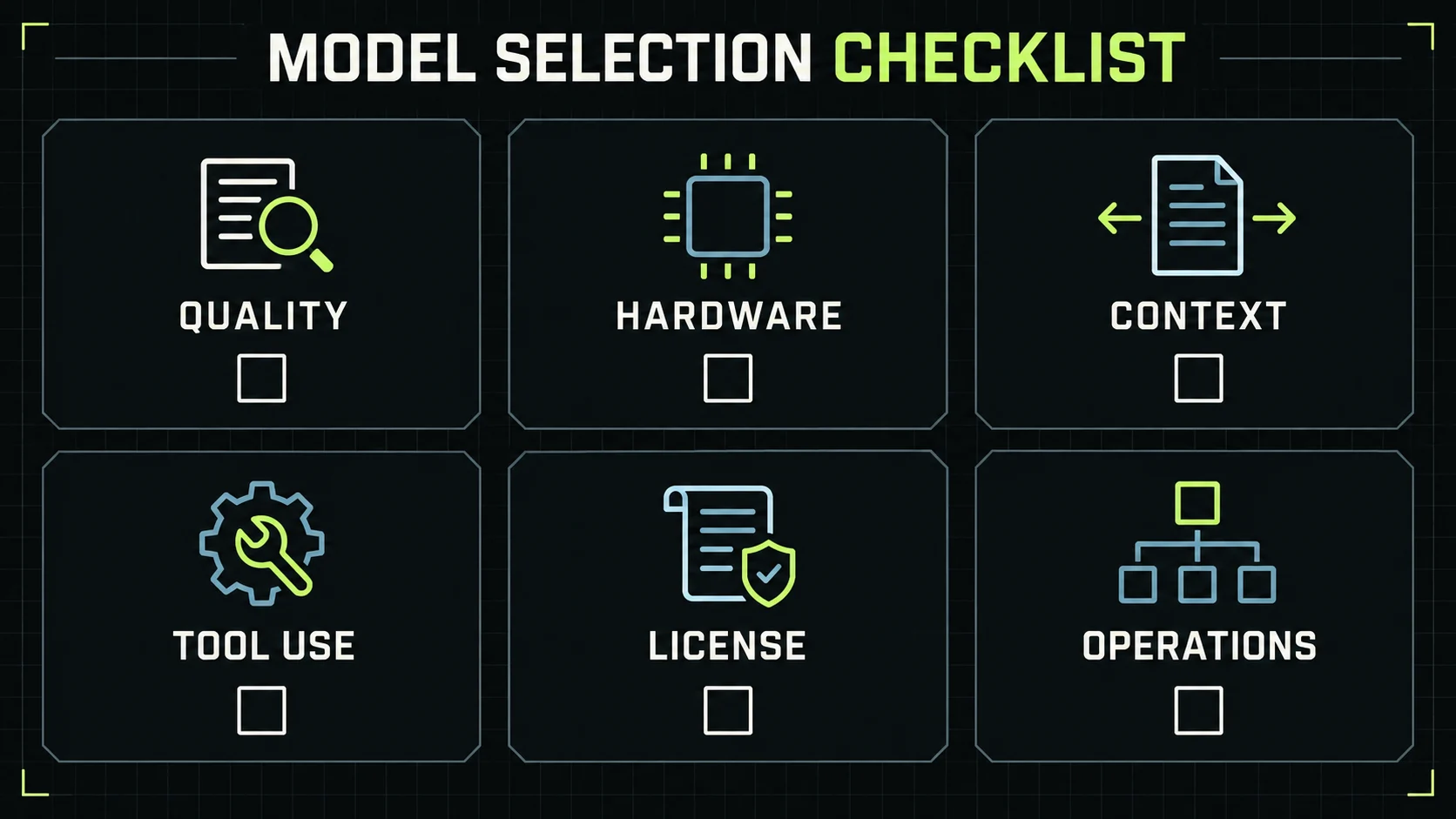
Six criteria that survive marketing cycles
1. Task quality
Build an internal suite from real work: localized bug fixes, cross-file refactors, test creation, migration planning, code review, and tool-driven repository tasks. Score correctness, patch size, regression rate, instruction following, and how often a human must take over.
2. Hardware and throughput
Total parameter count does not directly equal runtime memory for mixture-of-experts models, but weights still have to be stored or distributed. Measure time to first token, tokens per second, concurrent throughput, queue time, and power or cloud cost at the quantization you will actually use.
3. Context behavior
A large advertised context window does not guarantee useful attention over a large repository. Test retrieval quality, instruction retention, file selection, and accuracy as context grows. Often, better indexing and context assembly outperform dumping the entire codebase into the prompt.
4. Tool use
Evaluate structured output validity, tool selection, argument accuracy, recovery after tool errors, and stopping behavior. Confirm that your inference server supports the chat template and tool parser expected by the checkpoint. A strong model with a mismatched serving template can look surprisingly weak.
5. License and governance
Review commercial rights, redistribution, fine-tuning, acceptable-use restrictions, attribution, and obligations for derived models. Record the model hash, source, license version, and approval in the deployment inventory.
6. Operations
Include model loading time, GPU availability, autoscaling, observability, upgrades, rollback, security patches, and support. “No per-token API bill” does not mean free. Compare total cost per successful task, not cost per generated token.
A fair evaluation protocol
Freeze a representative task set and expected outcomes.
Pin model versions, quantization, inference engine, prompts, tools, and sampling settings.
Run enough repetitions to reveal variance.
Blind human reviewers to model identity where possible.
Record quality, latency, tokens, hardware utilization, failures, and human effort.
Test adversarial repository content and unsafe tool requests.
Repeat after any model, prompt, or serving change.
How to choose among them
Start with constraints. If permissive licensing and a smaller footprint dominate, shortlist the smaller variants first. If long-context agentic repository work dominates, test the larger coding-specialized checkpoints. If you need a general reasoning model that also supports tools, include gpt-oss. Then let your internal evaluation decide.
Do not confuse self-hosting with automatic privacy. Prompts can still leak through logs, tracing exporters, object storage, or misconfigured inference endpoints. Private deployment only helps when the entire data path is private.
Open weights versus hosted frontier models
A hybrid architecture is often rational. Run classification, code search, routine transformations, and sensitive work on an open-weight model; escalate unusually hard tasks to a hosted model under explicit policy. Route by risk and measured quality, not brand loyalty.
The decisive advantage of open weights is optionality. You can move providers, control retention, and adapt the serving stack. The decisive disadvantage is that every operational failure is now yours.
The practical recommendation
Pick the smallest model that clears your quality threshold with acceptable intervention. Keep a harder model as an escalation path. Re-evaluate quarterly because model families and inference engines change quickly. And publish your own decision record: task mix, hardware, metrics, license, and failure modes.
Developer communities such as daily.dev are useful for discovering new checkpoints and workflows. Use that stream to build a shortlist, then return to model cards, repositories, licenses, and reproducible local tests before making a production choice.
Primary sources and further reading
Information checked on September 22, 2026. Model specifications and licenses can change; verify the exact checkpoint before deployment.